
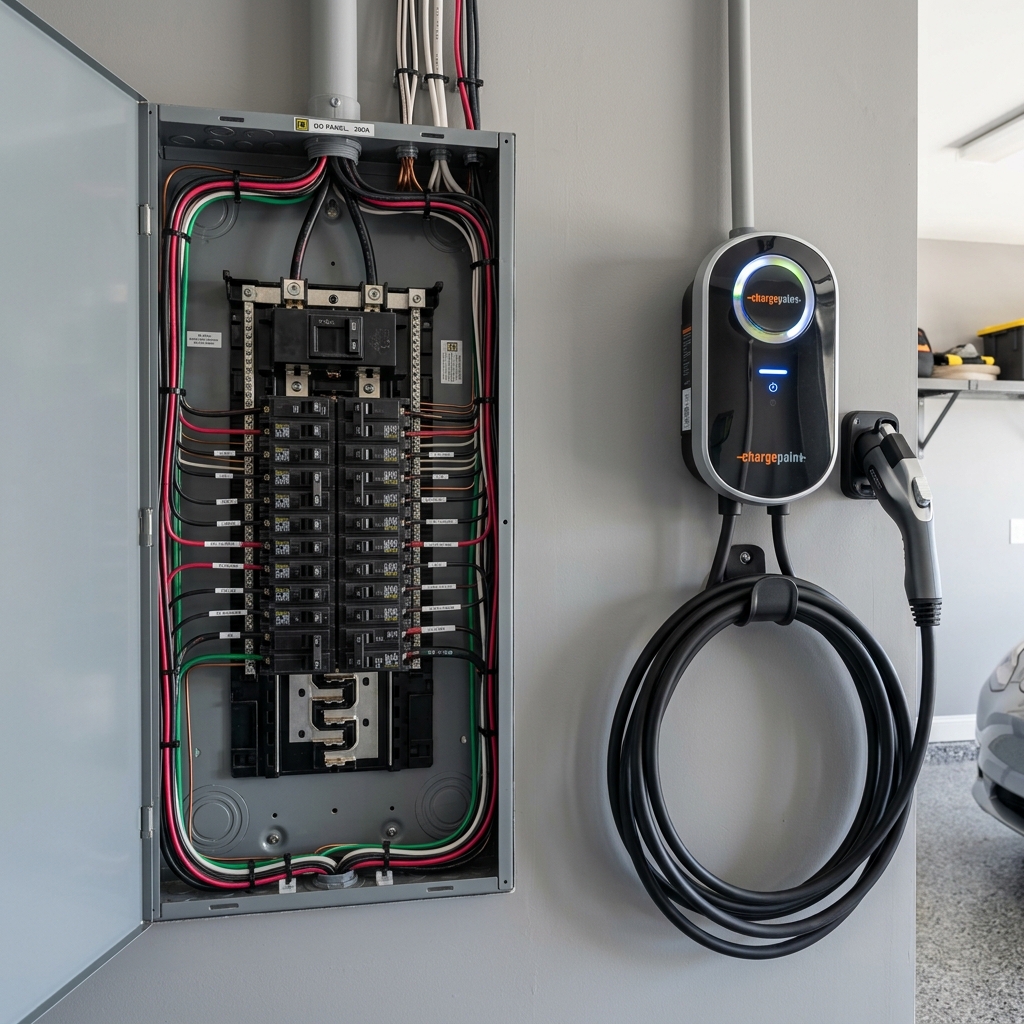
Before choosing or installing a Level 2 charger, checking your home's raw electrical load calculation is critical. We break down the differences in charging speed, amperage limits, and system load.
Level 1 vs. Level 2 Charging Speeds
A Level 1 charging cable plugs directly into a standard 120-volt wall outlet. It is slow, adding about 3-5 miles of driving range per hour. A Level 2 charging station runs on a dedicated 240-volt double-pole circuit (similar to a clothes dryer or central A/C). It delivers 25-45 miles of range per hour, meaning it can recharge your vehicle overnight in 4-8 hours.
Amperage Capacity Assessments
A typical Level 2 charger draws 32 to 40 amps and requires a dedicated 40-amp or 50-amp circuit breaker. If your home has a 100-amp service electrical panel, adding this new continuous load alongside high-draw appliances (A/C, electric dryer, microwave, dryer) might exceed safely allowed limits. Homes with 200-amp panels generally have ample capacity to add Level 2 charging without issues.
Panel Upgrades vs. Smart Chargers
If your panel is nearing capacity, you may need a panel upgrade (service upgrade) to 200 amps. Alternatively, you can use a modern smart charger featuring dynamic load management. These systems throttle the vehicle's charge rate temporarily when household consumption spikes, preventing system overloads and avoiding the cost of a panel upgrade.