
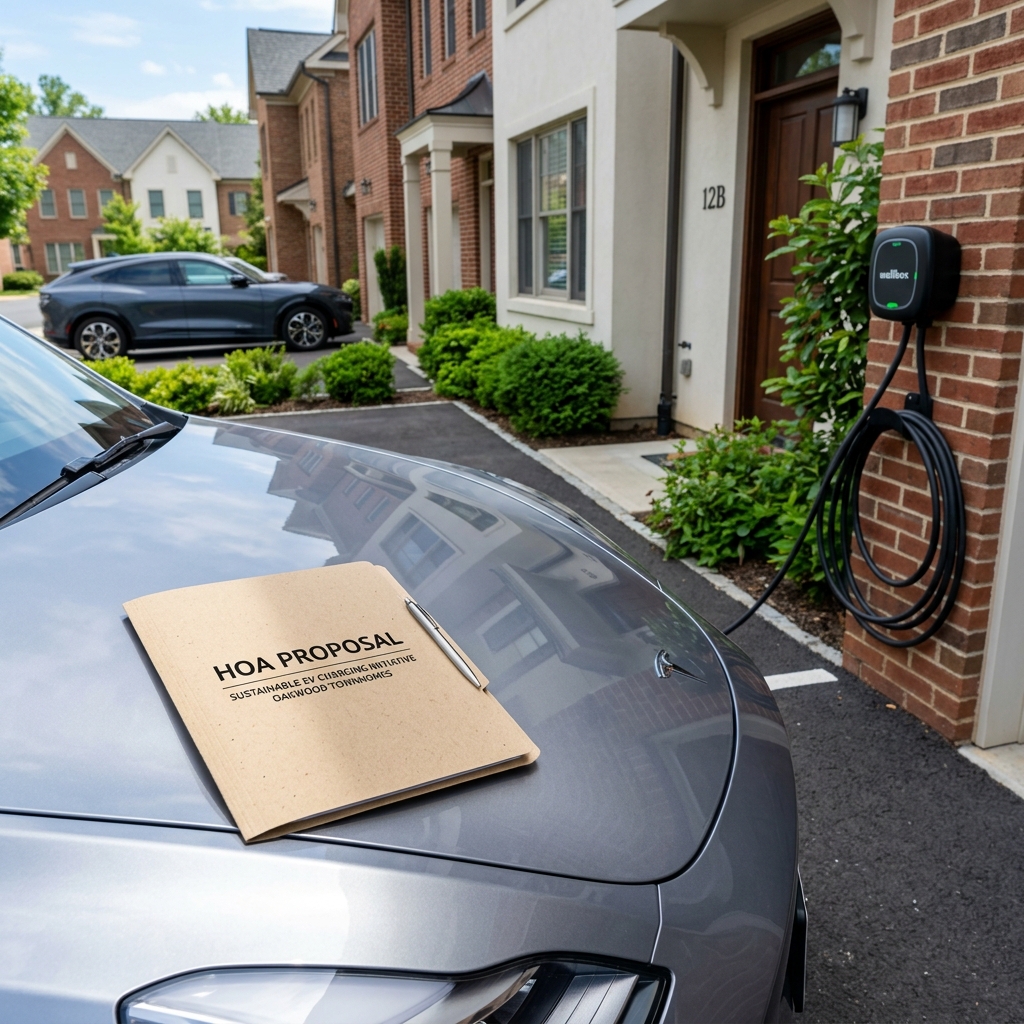
For homeowners living in townhouses, condominiums, or communities managed by a Homeowners Association (HOA), installing a Level 2 EV charger involves navigating community rules. Understanding your legal rights and submitting a thorough, professional proposal will maximize your chances of quick board sign-off.
Understanding "Right-to-Charge" Laws
Before speaking to your board, research whether your state has passed "Right-to-Charge" legislation. States including California, Colorado, Florida, New York, Oregon, Virginia, and others have laws that limit an HOA's ability to forbid EV charger installations. While HOAs can enforce reasonable aesthetic or safety rules (such as requiring licensed installers or specific conduit pathways), they cannot outright ban installations or make them prohibitively expensive.
Elements of a Winning HOA Proposal
Do not submit a simple, informal request. Presenting a professional proposal folder demonstrates that you have addressed safety and structural concerns:
- Licensing and Insurance: Provide copies of your chosen electrician's state license and liability insurance certificates to reassure the board that the work is fully insured.
- Electrical Load Calculations: Include an electrician-signed assessment showing that the proposed installation will not overload community sub-panels or shared transformers.
- Detailed Site Schematics: Provide a simple plan mapping where the conduit will run, how the charger will be mounted, and its exact dimensions. Emphasize low-profile, clean aesthetics.
- Equipment Specifications: Attach the manufacturer datasheet showing the safety certifications (UL or ETL listed) and NEMA weatherproofing ratings of the charging station.
Addressing Billing and Shared Spaces
If you have a dedicated parking space but share a utility line with other residents, billing is a common board concern. You can address this by proposing:
- Sub-Metering: Installing a dedicated utility meter for your charging circuit so you are billed directly by the power company.
- Smart Charging Subscriptions: Using a smart charger with built-in billing capabilities (like ChargePoint or Wallbox) that tracks energy usage (kWh) and allows the HOA to bill you based on exact app logs.
Next Steps for Homeowners
Begin by requesting your HOA's architectural review guidelines and talking to neighbors to identify potential EV charging allies. If you present a thorough, pre-calculated installation plan that adheres to building standards, most HOA boards will grant approval with minimal delay.