
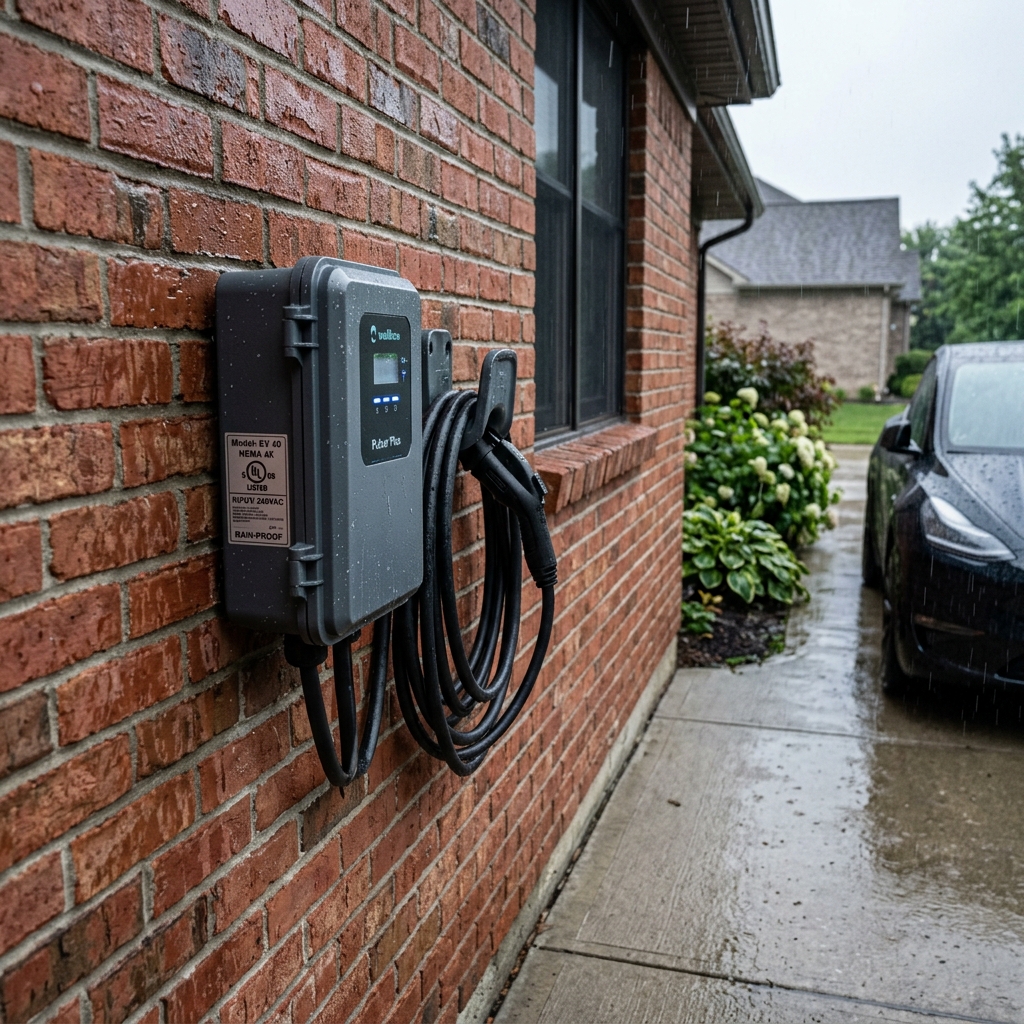
If your home lacks a garage or you prefer parking in your driveway, installing an EV charger outdoors is a highly practical solution. However, mounting electrical equipment in the elements requires specific weatherproofing, mechanical protection, and security safeguards to ensure long-term performance.
Weatherproofing Standards and NEMA Enclosure Ratings
Before installing a charger outdoors, check its National Electrical Manufacturers Association (NEMA) rating. A NEMA enclosure rating defines how well the housing protects internal components from water, dust, and ice:
- NEMA 3R: Protects against rain, sleet, snow, and external ice formation. Suitable for moderate outdoor climates.
- NEMA 4: Offers all NEMA 3R protections plus defense against windblown dust and direct hose-directed water streams. Ideal for heavy rain, coastal salt spray, or extreme winter climates.
For outdoor installations, a NEMA 4 rated hardwired charger is generally recommended over a plug-in unit to eliminate moisture vulnerability at the outlet socket.
Physical Protection and Weatherproof Conduits
Outdoor wiring must run through heavy-duty conduit to defend against weather and physical impacts (like weed whackers or cars). Electricians use Schedule 80 PVC or liquid-tight flexible metal conduit (LFMC) to run electrical lines from your panel to the outdoor station. Seals at all entry points into the charger or home must be sealed with outdoor-rated silicone sealant or duct seal compound to prevent moisture migration.
Securing Your Electricity and Preventing Power Theft
An outdoor charger is accessible to neighbors and passersby, raising the risk of unauthorized power draw. To prevent electricity theft:
- Smart App Access: Choose a smart charger that allows you to lock the charger via smartphone app, requiring authentication before dispensing power.
- Physical Key Locks: Many chargers feature built-in lock slots to secure the plug into its holster when not in use.
- RFID Authorization: Some chargers use RFID cards to activate charging, allowing family members or trusted neighbors access while blocking strangers.
Preventing Physical and Cable Theft
With copper prices rising, EV charger cables are occasionally targeted by thieves. To protect your hardware, mount your charger in a well-lit area, preferably under a security camera. Keep cables coiled and hung neatly in a locking cabinet or utilize heavy-duty cable locks when the vehicle is parked. Secure the charging unit's bracket to brick or studs with security screws to prevent unauthorized removal of the hardware itself.