
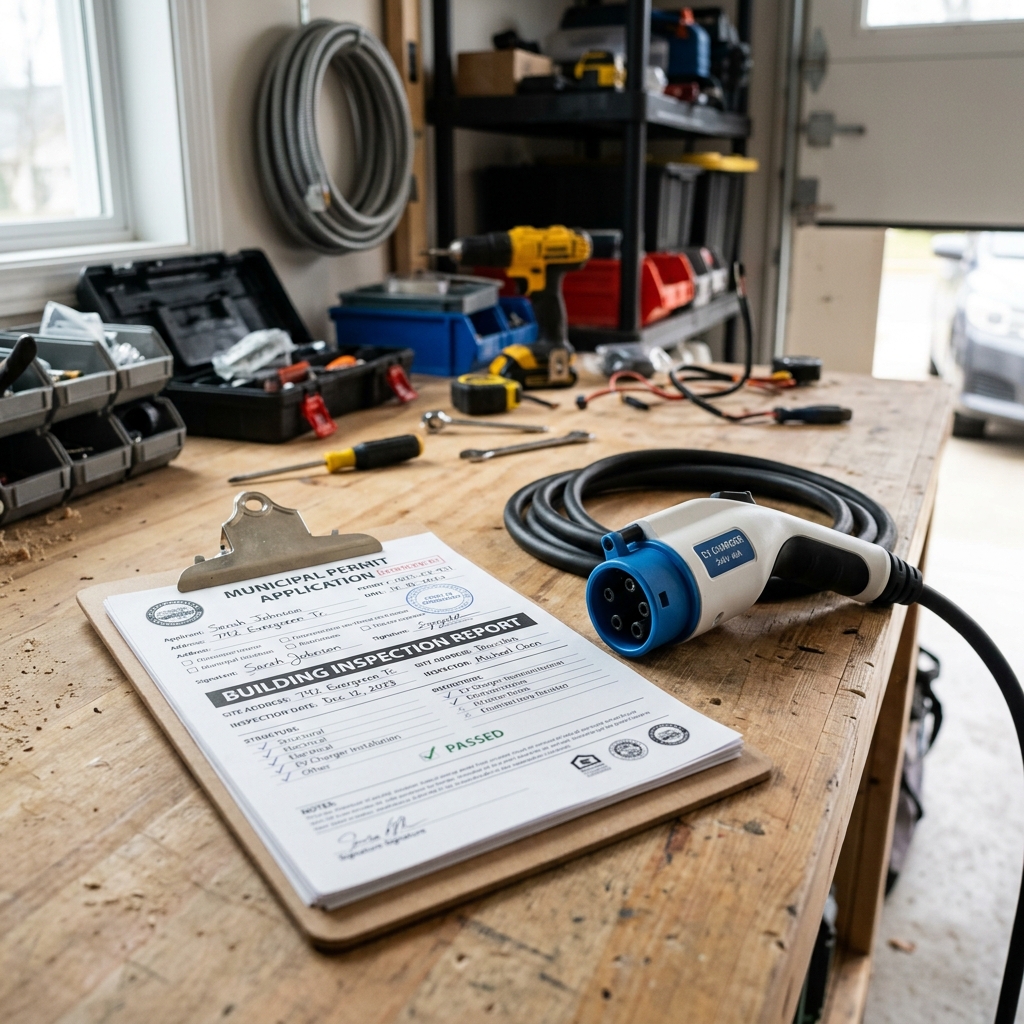
Installing a Level 2 electric vehicle charger is a significant upgrade to your home's electrical grid. Navigating local building codes, pulling municipal electrical permits, and ensuring professional installation are critical steps for safety, legal compliance, and protecting your homeowner's insurance policy.
Why Local Jurisdictions Require Electrical Permits
Because Level 2 charging stations draw continuous loads of 32 to 50 amps at 240 volts over several hours, they represent one of the heaviest electrical draws in a residential home. Municipal building departments mandate electrical permits to verify that the existing electrical panel, wire gauges, and circuit breaker ratings conform to the National Electrical Code (NEC). Skipping this stage creates a severe risk of overloaded circuits, thermal build-up, and home fires.
The Municipal Permitting and Inspection Process
A standard permitted installation involves three primary steps to ensure safety and code compliance:
- Load Calculation: An assessment is performed to prove your electrical panel can support the new continuous load without exceeding 80% of its rated service capacity.
- Permit Filing: The installer submits circuit schematics and equipment specs to the local building authority.
- Final Inspection: After wiring is complete, a city inspector visits to examine the installation, verify wire gauges, check grounding connections, and officially sign off on the permit.
How Unpermitted Work Impacts Homeowner's Insurance
The largest risk of unpermitted installations relates to insurance protection. Almost all homeowner insurance policies contain clauses excluding coverage for damages resulting from work performed by unlicensed contractors or without municipal permits. If a electrical fire occurs and investigators determine the cause was an unpermitted EV charging circuit, the insurance company has legal grounds to deny the claim, leaving the homeowner fully liable for rebuilding costs.
Why Professional Electricians Are Mandatory for Compliance
Hiring a licensed, insured EV-certified electrician guarantees that the load calculations are accurate, the permit is properly pulled, and the installation meets NEC standards. Additionally, professional installers provide a warranty for their labor and maintain records of compliance, which can be presented to insurance companies or potential home buyers as proof of a safe, code-compliant property upgrade.