
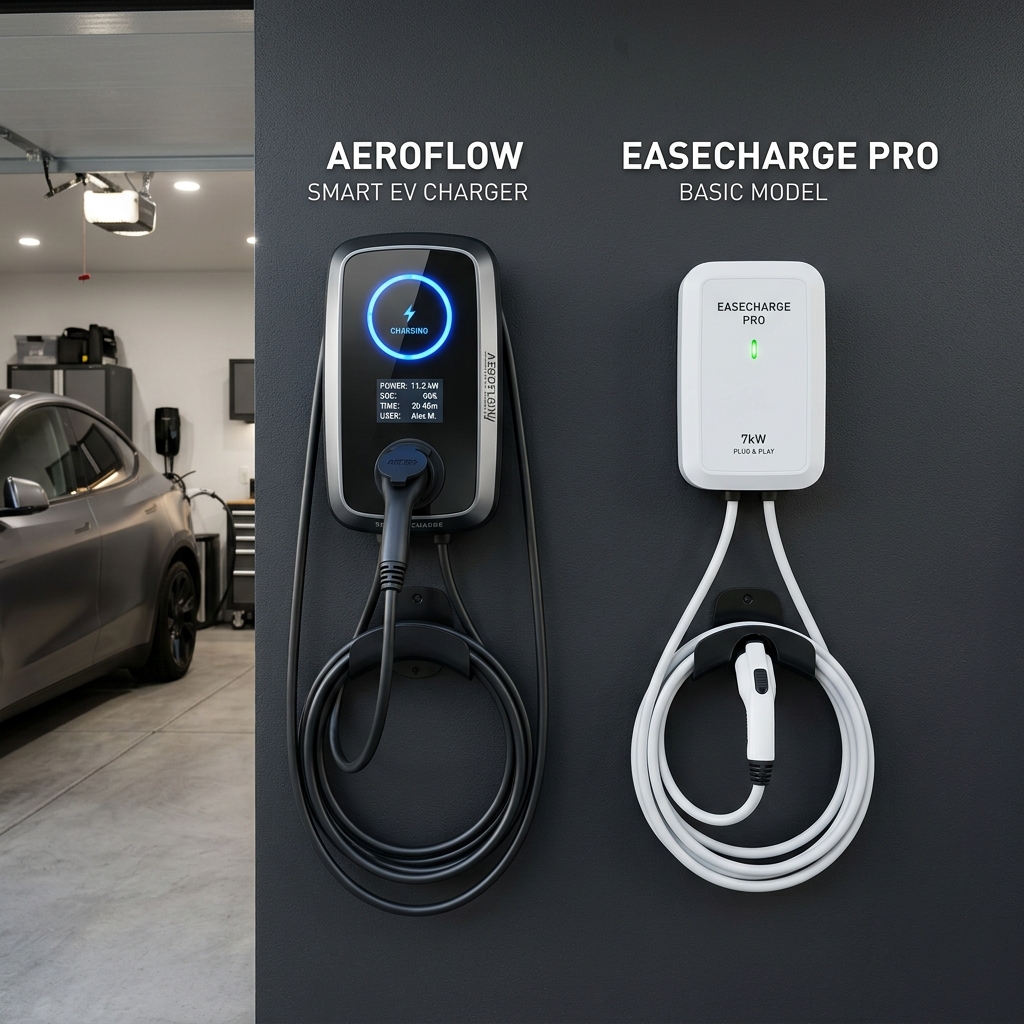
When choosing a Level 2 home charging station, one of the first design decisions you will make is whether to purchase a "smart" (WiFi-enabled) or a "dumb" (plug-and-play) charger. While both charge your vehicle at similar speeds, their features, cost, and utility integration differ significantly.
What is a "Dumb" EV Charger?
A basic or "dumb" charger is a simple electrical appliance with no internet connectivity. When plugged in, it immediately delivers power to the vehicle until the battery is full. These chargers are highly reliable, have fewer components that can fail, and are generally less expensive upfront. If your EV has robust charging scheduling built into its native dashboard or smartphone app (like Tesla or Rivian), a basic charger may be all you need.
The Advantages of a Smart EV Charger
Smart chargers connect to your home WiFi network and are managed via a smartphone application. They offer several advanced capabilities:
- Scheduled Charging: Easily configure your charger to start operating only during cheaper, off-peak energy hours, regardless of your car's native software limitations.
- Real-Time Monitoring: Track energy consumption (kWh), charging history, and approximate charging costs over time.
- Over-The-Air Updates: Receive manufacturer software updates to improve performance, add features, and patch security vulnerabilities.
- Smart Home Integration: Link your charger with voice assistants (Amazon Alexa, Google Home) or solar management systems.
Utility Incentives and Demand Response
The most compelling financial reason to choose a smart charger is utility program eligibility. Many electric utilities offer cash rebates or discounted electricity rates exclusively for customers who install certified smart chargers. In exchange, utilities may use "demand response" APIs to temporarily slow your charger's draw during peak grid emergency events, helping prevent local blackouts while saving you money.
Making Your Decision
If you prefer simplicity, have a vehicle with excellent built-in scheduling, and do not qualify for utility smart-charger rebates, a high-quality "dumb" charger is an excellent, cost-effective choice. However, if you want detailed energy tracking, qualify for local cash-back incentives, or require advanced charging integration (like solar matching), investing in a smart charger is well worth the premium.