
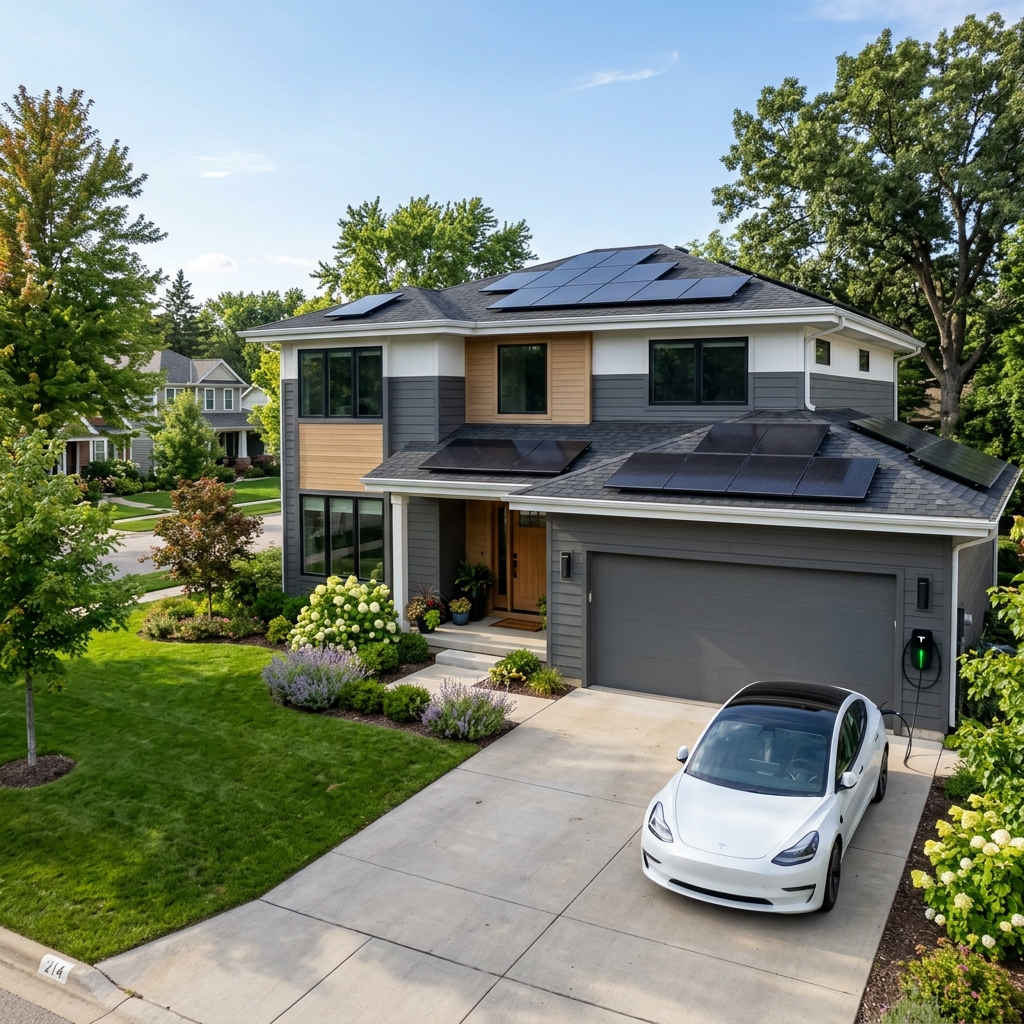
Powering an electric vehicle with home solar panels represents the ultimate milestone in residential clean energy. By combining your solar array with a Level 2 charging station, you can minimize or eliminate charging costs while driving on 100% self-generated renewable energy.
How Solar-to-EV Power Systems Work
A residential solar energy system generates direct current (DC) electricity, which a solar inverter converts to alternating current (AC) to power your household loads. When you plug in your EV, the charger draws AC power directly from this system. If your solar production exceeds household loads, the excess current is fed directly into your vehicle's battery. If solar output is low, the system automatically pulls supplementary power from the utility grid.
The Role of Smart Solar-Aware EV Chargers
Standard EV chargers draw power at a fixed rate, which can lead to drawing grid power if solar production drops (e.g., when a cloud passes). To optimize self-consumption, you should choose a solar-aware smart charger. These devices monitor real-time home solar output and continuously modulate the EV charge rate. By matching the charging speed to excess solar production, they ensure your car charges exclusively with clean, free energy.
Integrating Home Battery Storage
Since most EV owners charge their cars overnight, storing daytime solar energy is crucial. Integrating a home battery system (such as a Tesla Powerwall or Enphase 5P) allows you to capture surplus solar power during peak sun hours and release it to charge your EV at night. This setup maximizes energy independence and shields you from expensive peak-hour grid rates.
Understanding Net Metering and Utility Policies
In regions with favorable net metering policies, you can export excess solar generation to the utility grid during the day for energy credits. At night, you can use these accumulated credits to draw grid power for EV charging. This virtual solar charging model is highly cost-effective, though homeowners under newer regulations (like California's NEM 3.0) will benefit far more by utilizing local battery storage to keep their generated electricity on-site.